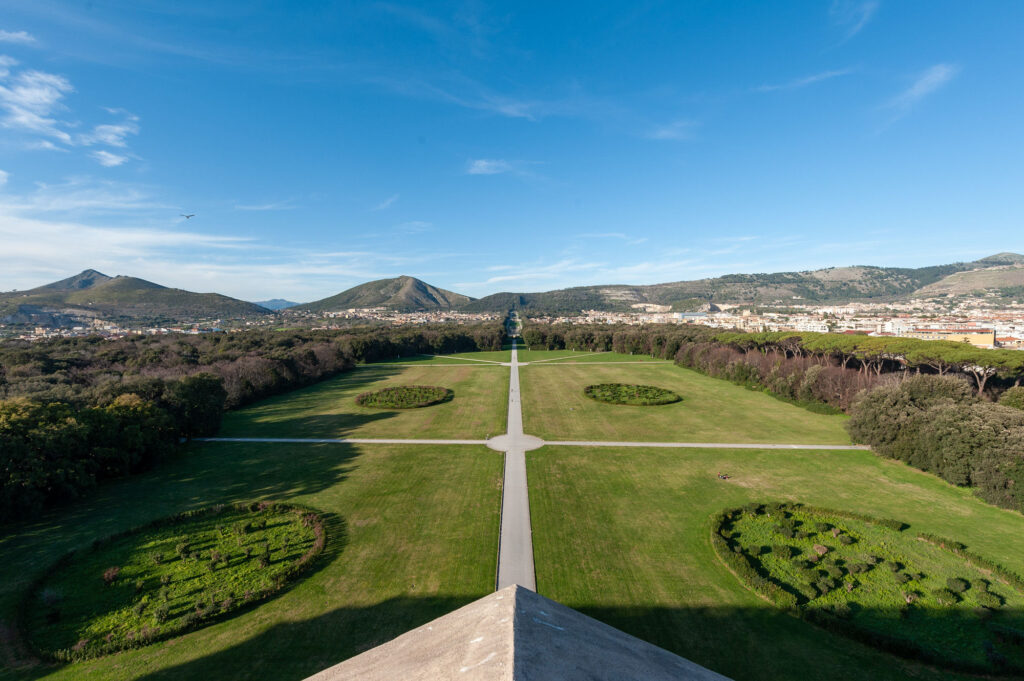
 Explore the Royal Palace
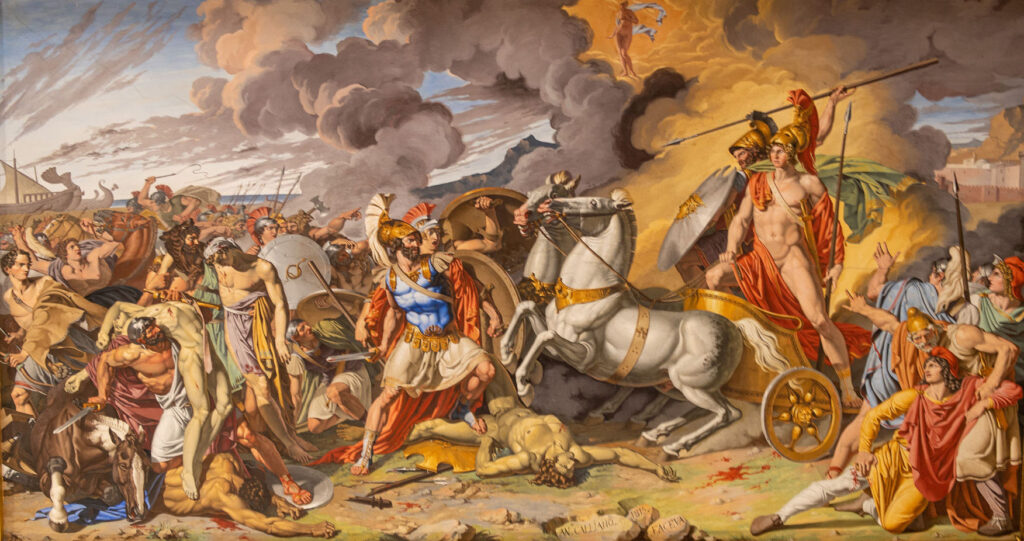

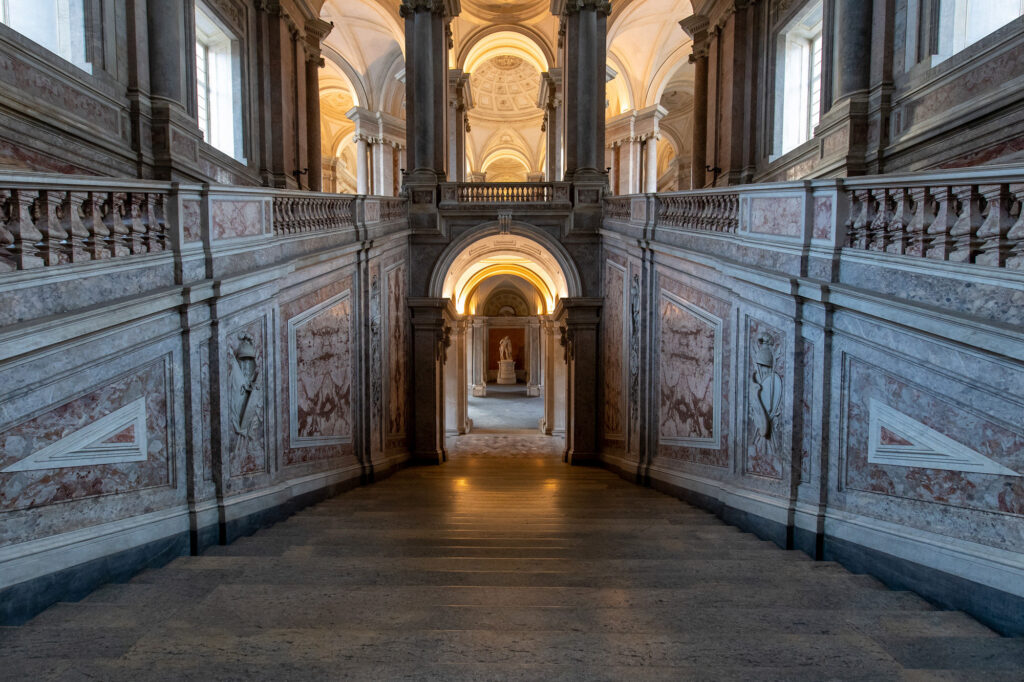
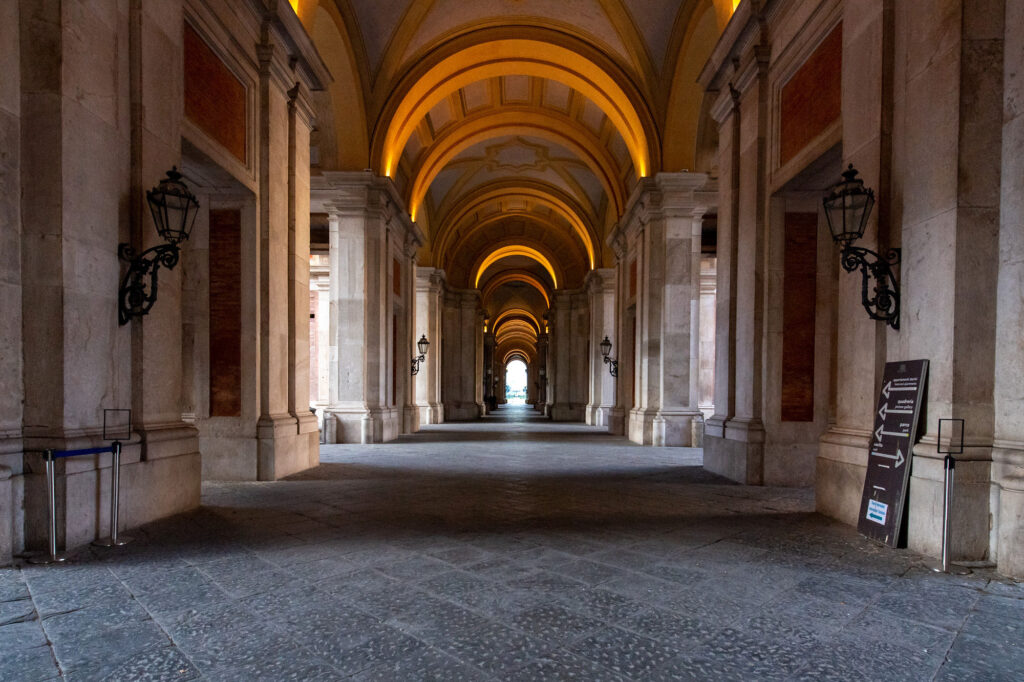


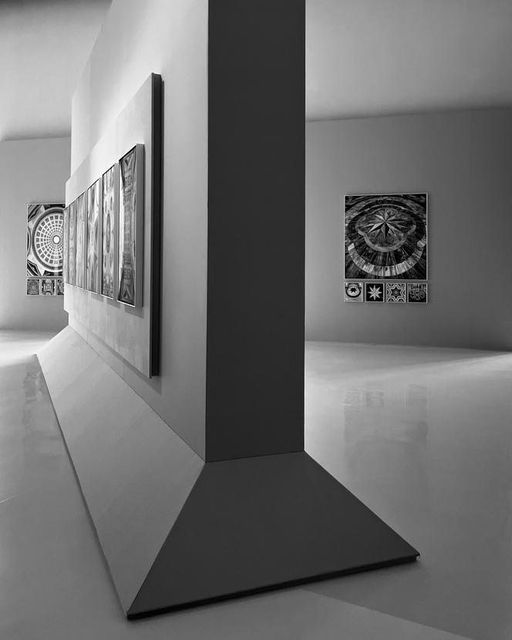
Grand Gallery

The Largest Hall of the Vanvitellian Complex
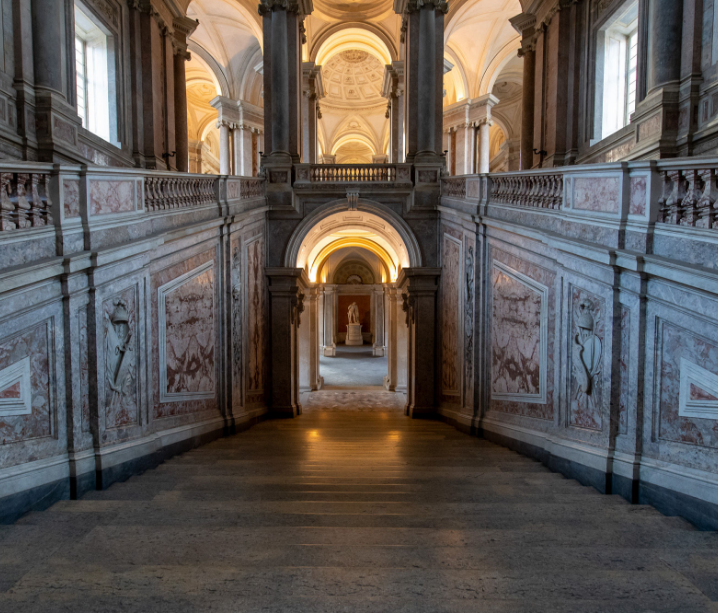
In Luigi Vanvitelli’s Declaration of the Drawings, this space was described as the great hall located at the center of the western wing of the Palace, serving as an internal link between the King’s and the Queen’s apartments.
Following the reduction of the original project after the Napoleonic period and the Bourbon Restoration, this hall—the largest in the entire Palace—remained unfinished. It was first used as the Racquet Hall, reflecting its function for that specific game, and later as the Salone dei Rustici.
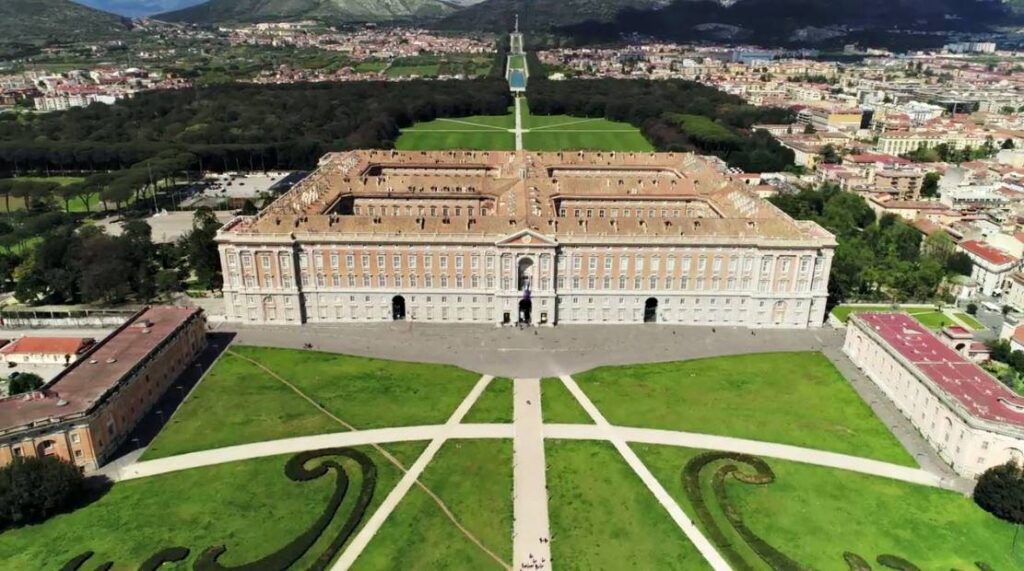
In 1922, the Royal Palace complex was transferred to the State Property Office and placed under the authority of the Directorate of Antiquities and Fine Arts of the Ministry of Public Education. On that occasion, part of the Palace was granted by the Royal Household to the Municipality for the “free and temporary” use of school facilities, while another section housed the Academy of the Guardia di Finanza until 1925. In 1926, the Air Force Academy was established within the Palace, gradually occupying the areas vacated by previous users.
In 1937, the Superintendency authorized the Air Force to install new reinforced concrete floors in the double-height rooms of the former Queen’s Apartment, in the Grand Gallery, and in the main hall on the northern side, of comparable size. These interventions radically altered the original proportions and volumes of the spaces, separating the vaulted ceilings from the lateral walls.
In the immediate post-war period, the Grand Gallery was assigned to the Italian Air Force Specialists School to serve as a dining hall and was later converted into a cinema.
Returned to the Ministry of Culture in 2017, the rooms of the Grand Gallery—now designated as a new exhibition wing—help to enrich and enhance the cultural offering of the Royal Palace of Caserta. The Museum continues its demanding process of restoring its spaces to an exclusively educational and museum-related purpose, as required by law.

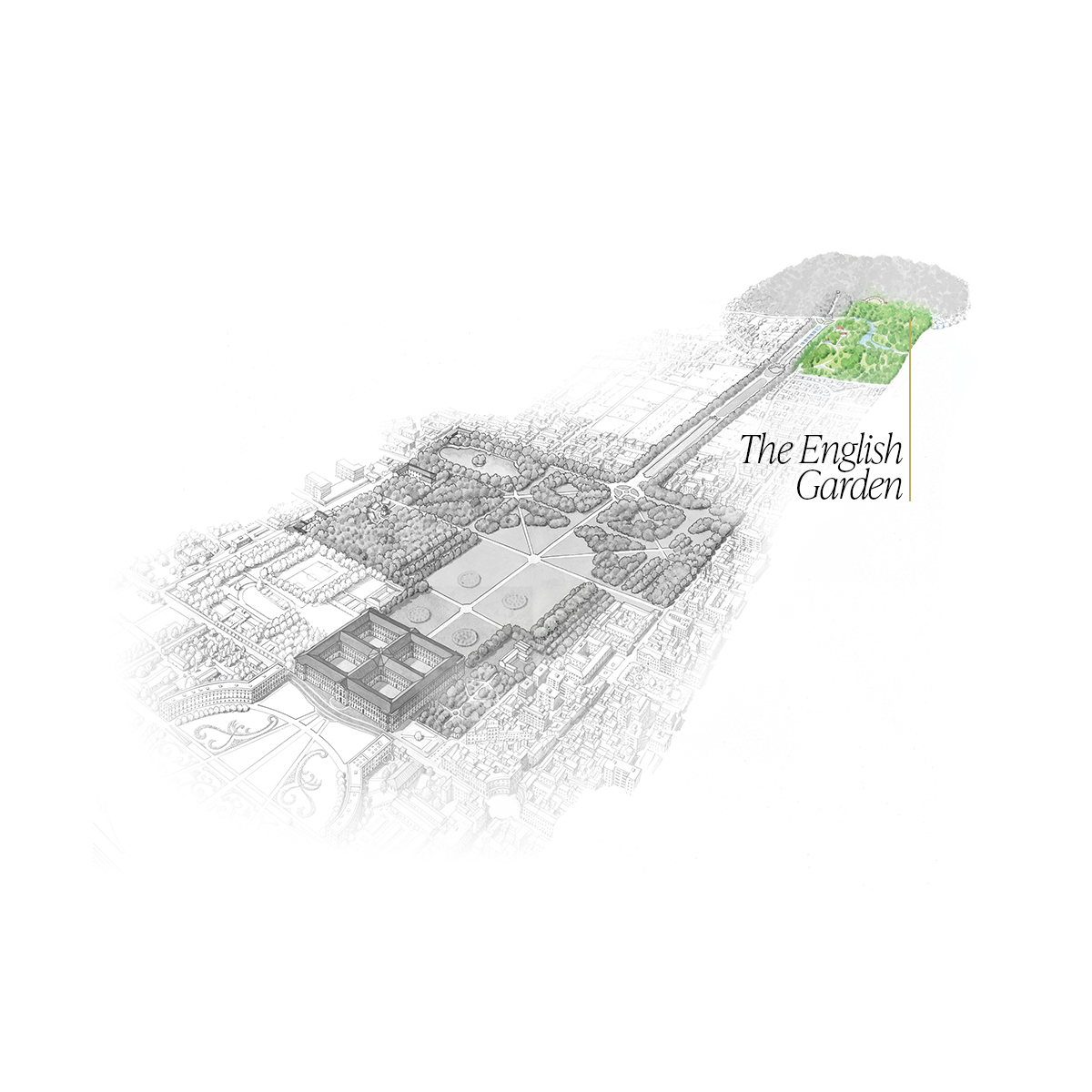
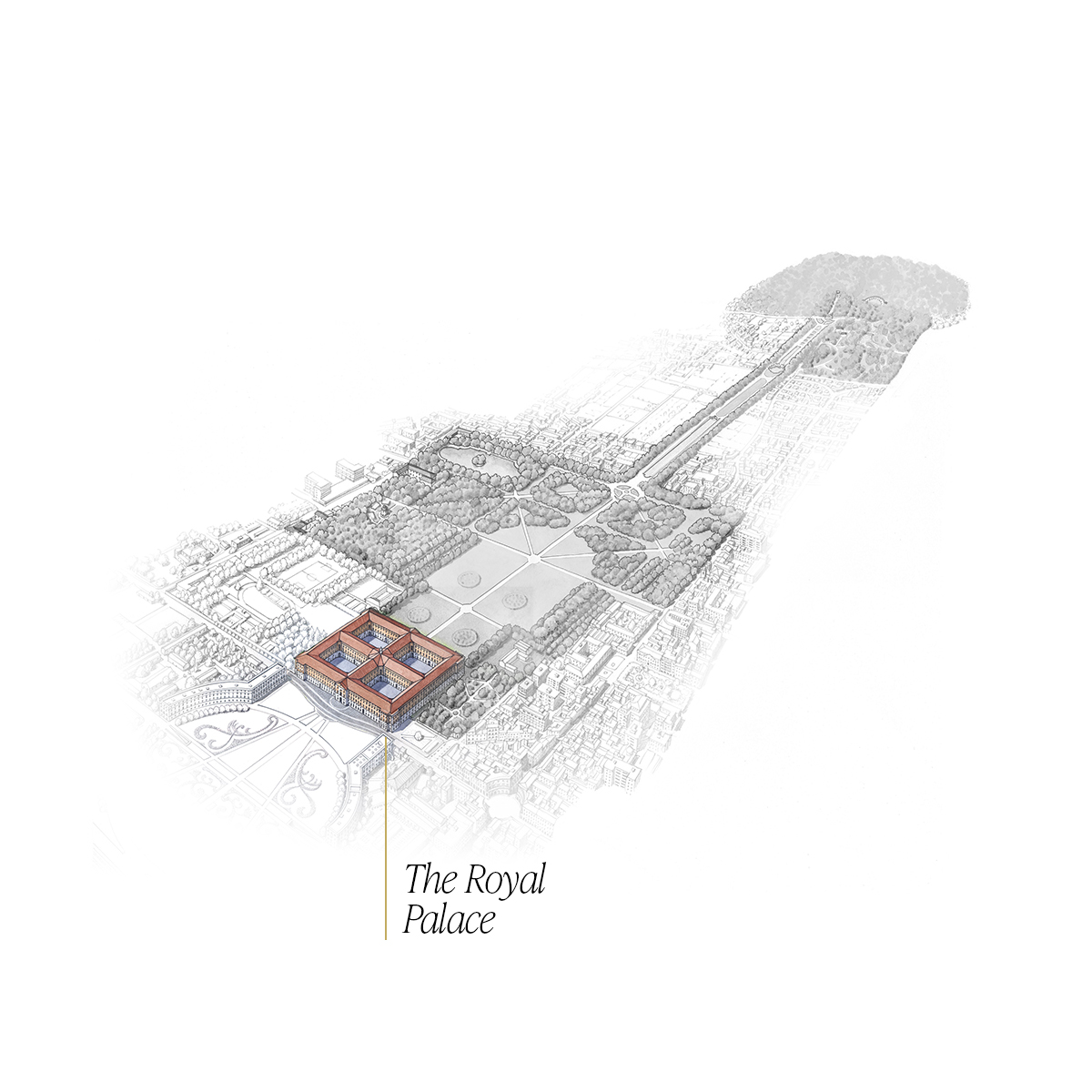
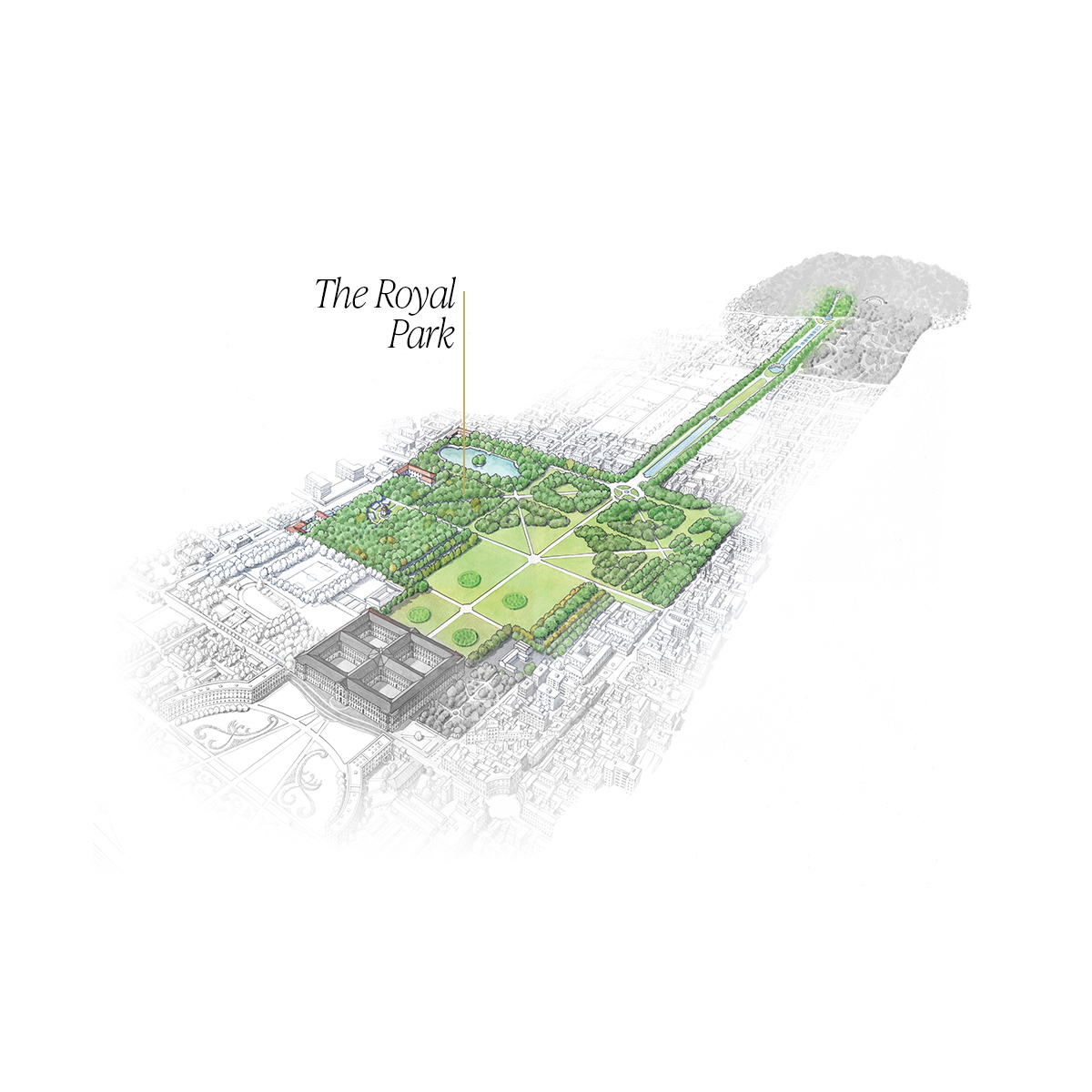
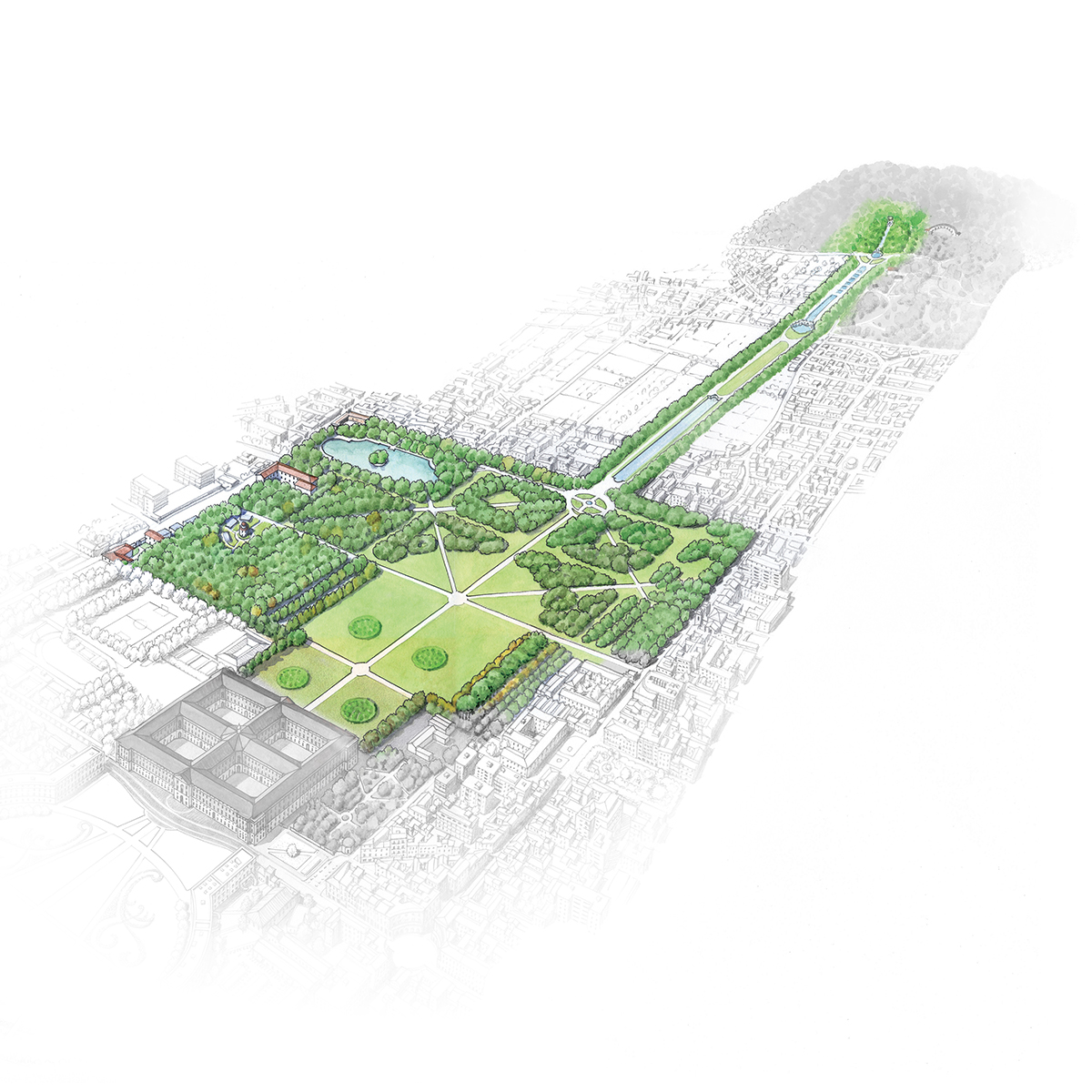
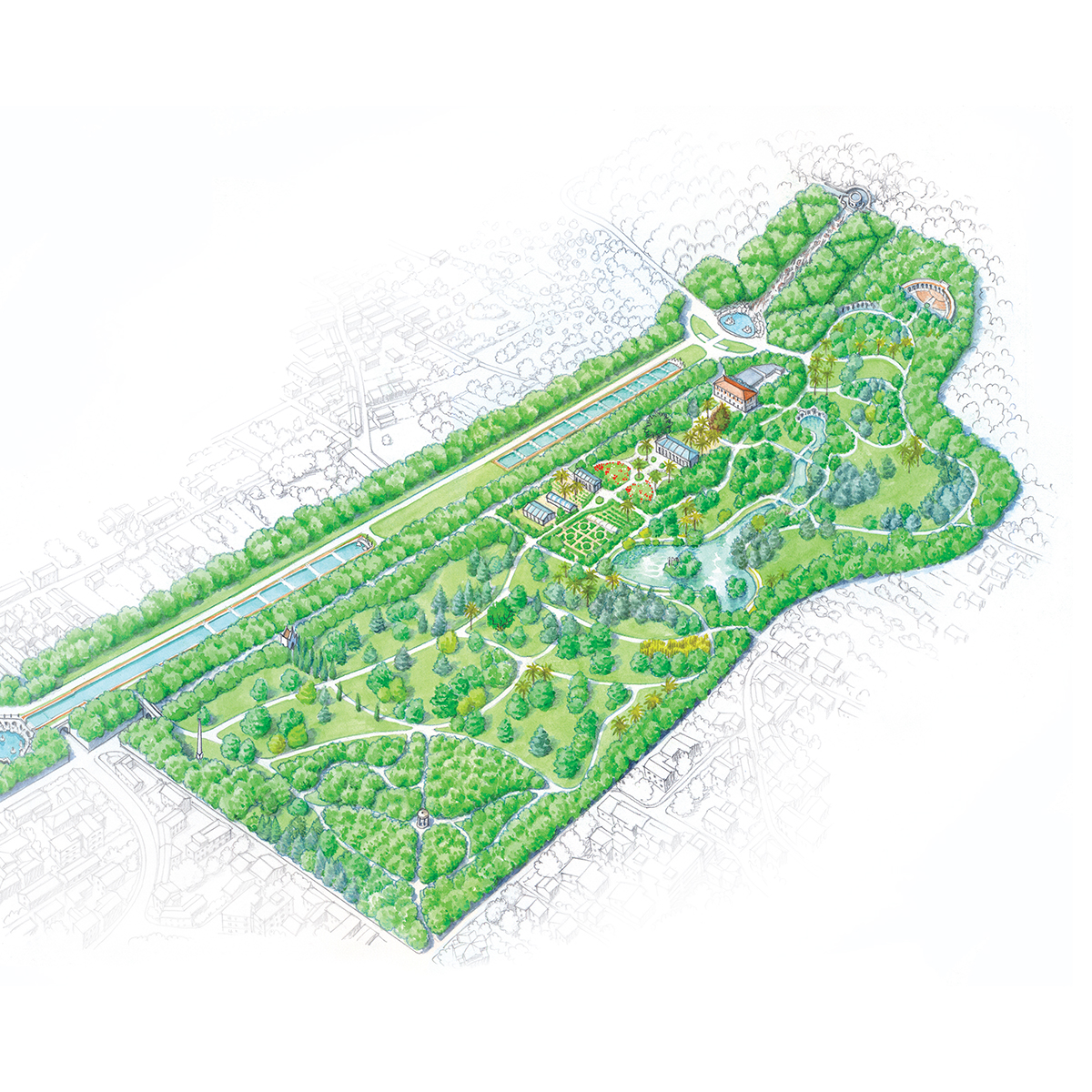
 Via d'acquaCastellucciaPeschieraThe Fountain of DolphinsThe Fountain of AeolusThe Fountain of CeresThe Fountain of Diana and ActaeonThe Fountain of Venus and AdonisThe waterfall and TorrioneThe Bosco Vecchio (Old Wood)The Margherita Fountain