


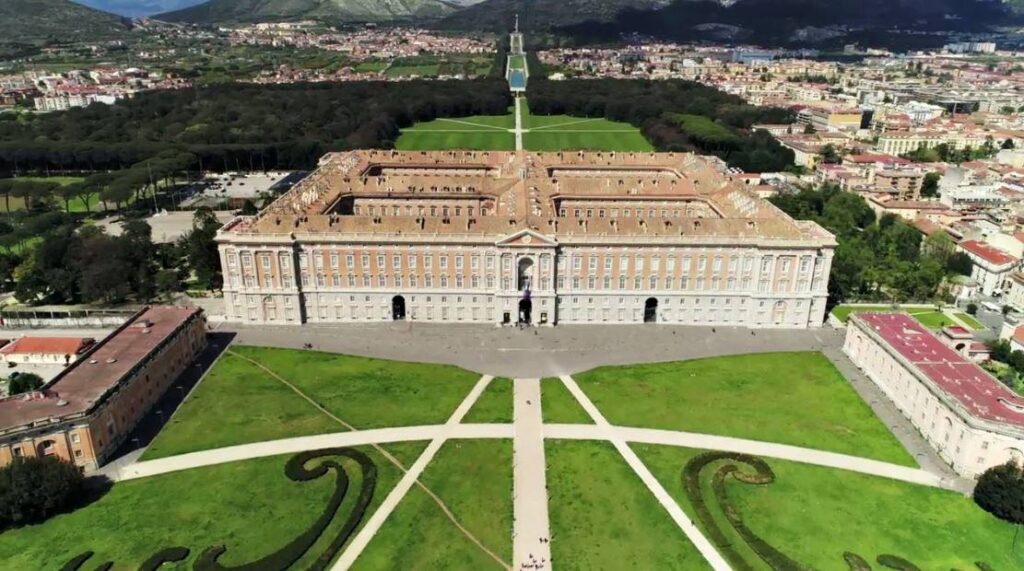
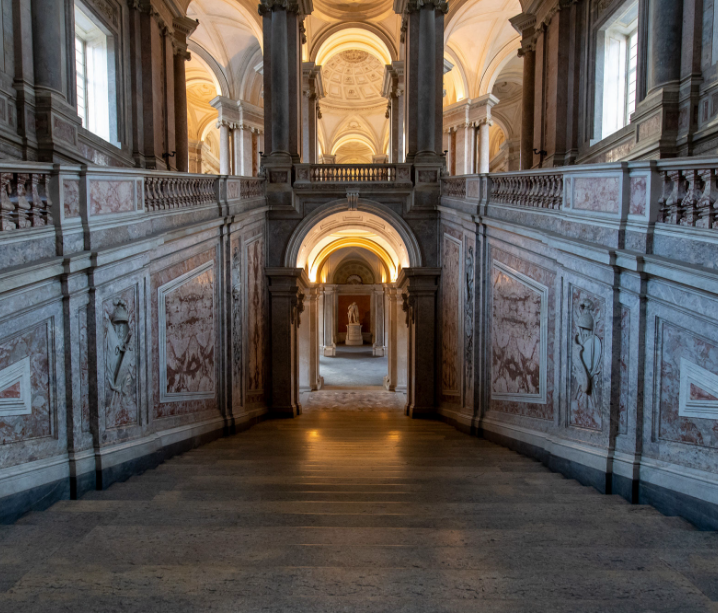
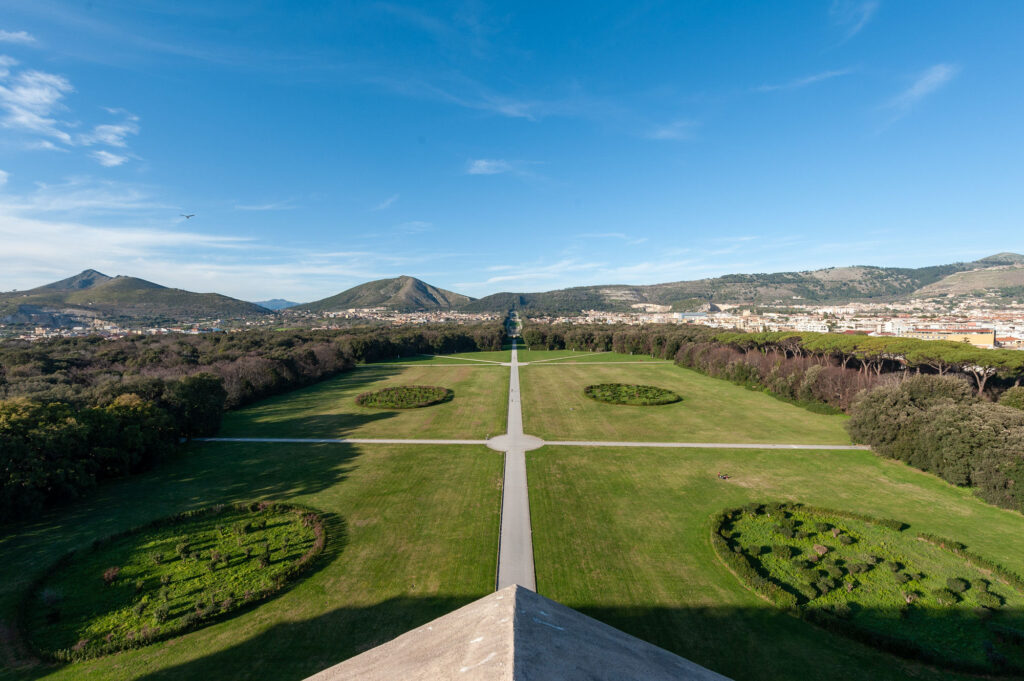
 Explore the Royal Palace




Luciano Romano
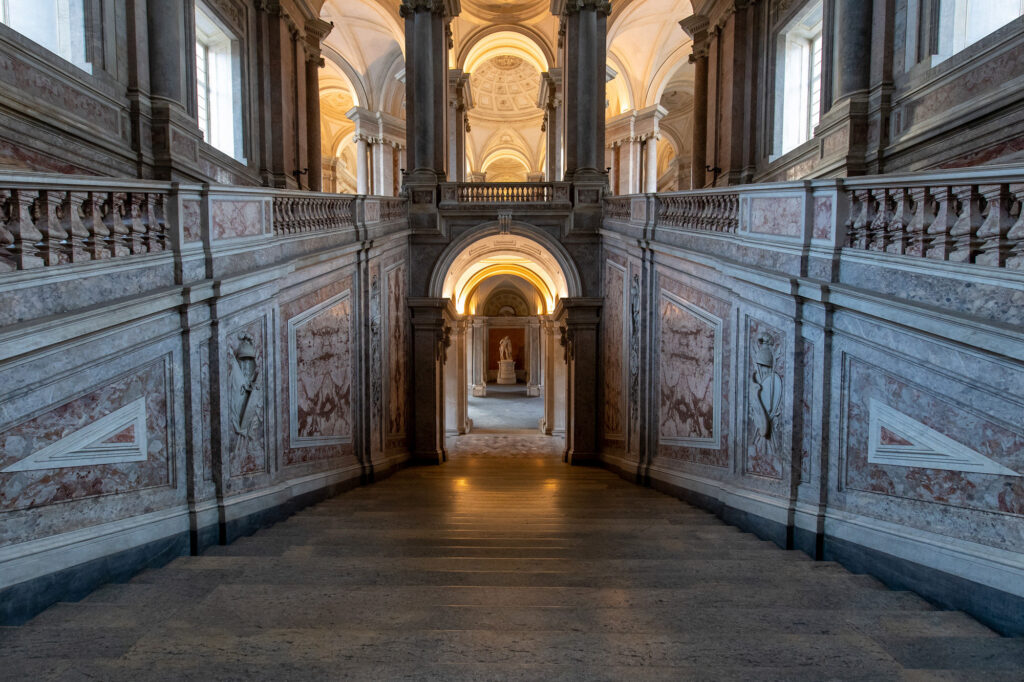
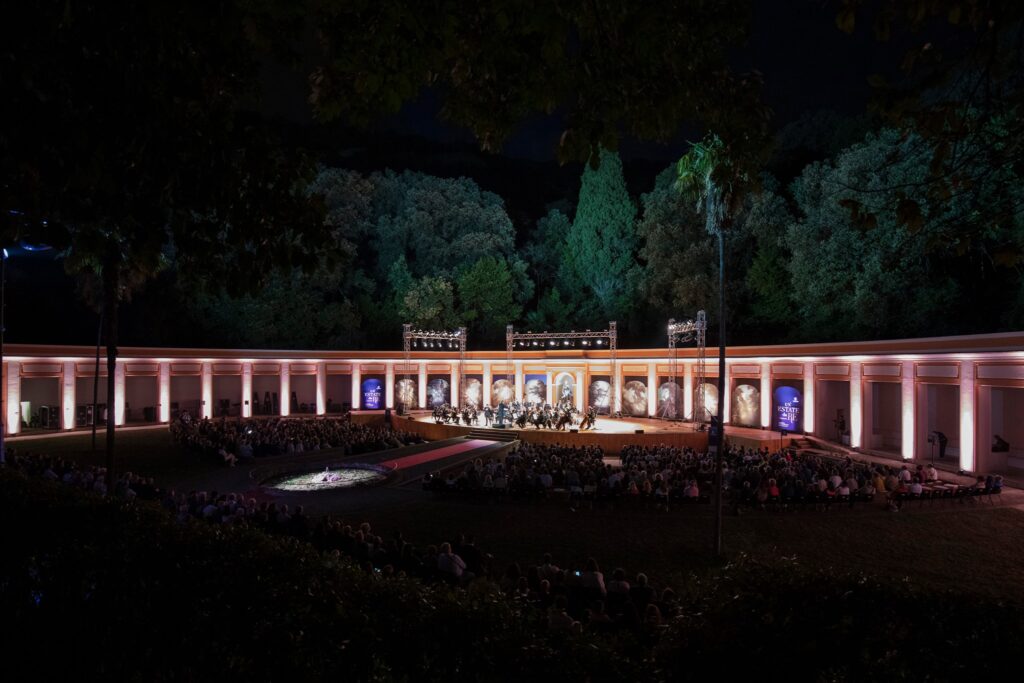
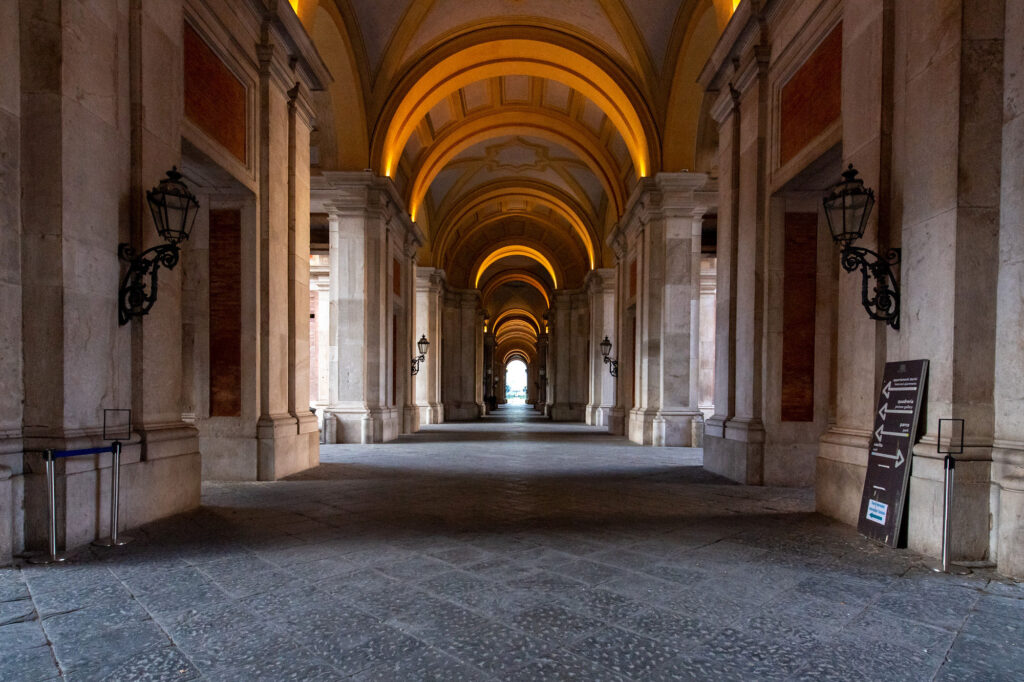
Luciano Romano’s photographs admirably describe the places he looks down, consequently the same places are enriched with his well-balanced emphasis, never superfluous. Beauty for Luciano Romano must be revealed and the consequence of this act are the triumph of shapes and colours. His use of light is intense and accurate. Thus, a suggestive journey through Campania cultural heritage among symbols, metaphors and myths starts.
Artist bio
Luciano Romano’s research focuses on the language of image. In 2003 he was among the winners of the Atlante Italiano 003, the prize awarded by the Italian Heritage Ministry and the Milan Triennale, in 2007 he received a nomination for the Prix BMW-Paris Photo. He has exhibited at the 20th International Architecture Exhibition of the Venice Biennale, the MADRE Museum in Naples, the MAXXI Museum in Rome, the MAMM in Moscow, at the Shanghai Expo, at the Armory in New York and at Fotografia Europea in Reggio Emilia.
His studies in Architecture as well as his theatre experience led him to develop a personal style that tends to stage the subject rather than simply record it objectively. In his public art installations the protagonists are the bodies and faces of actors, singers and dancers, never portrayed in a pose but during a performance specifically created for the photographic shot. Among them, we can mention the nine large photographs taken as a contribution to the permanent installation by Shirin Neshat at Toledo metro station of the Naples Metro, curated in 2013 by Achille Bonito Oliva, subsequently displayed in 2014 at the MAMM in Moscow for the Photobiennale. In 2015 he participated in Sconfinamenti#3, curated by Achille Bonito Oliva (Festival dei Due Mondi, Spoleto) and in 2017 the volume Le regard oblique, with a preface by Giulio Paolini, was published by 5Continents. In 2018 he collaborated again with Shirin Neshat on a commission for the National Portrait Gallery in London, with a portrait of the Nobel Prize Malala Yousafzai. In December 2019 at Scampia station in the Naples Metro he presented the permanent public art installation Song ’e mare: “Fourteen full-length photographs of Neapolitan musicians and singers, arranged along the same horizon line between the sky and the sea as they take a step forward in a constant dynamic between stage and backstage, light and shadow, learned and popular, memory and hunch.” (Andrea Viliani, 2019).
In 2022, the exhibition “Ex Novo” at Pio Monte della Misericordia in Naples is a dialogue between contemporary photography, great baroque painting and “The Seven Works of Mercy” by Caravaggio. Luciano Romano is among the winners of the 2022 Strategia Fotografia call for proposals of the Contemporary Creativity Directorate of the Ministry of Culture for the commission dedicated to a project on the architecture of Luigi Vanvitelli aimed at the exhibition “Genius et Loci” the Royal Palace of Caserta (2024) now permanent collection of the Museum.
His works are collected in several public and private collections, such as the collection of the MAXXI Museum in Rome; the Robert Rauschenberg Foundation in New York; the MADRE Museum in Naples; the ICCD in Rome; The Royal Palace of Caserta.

 Travel notes
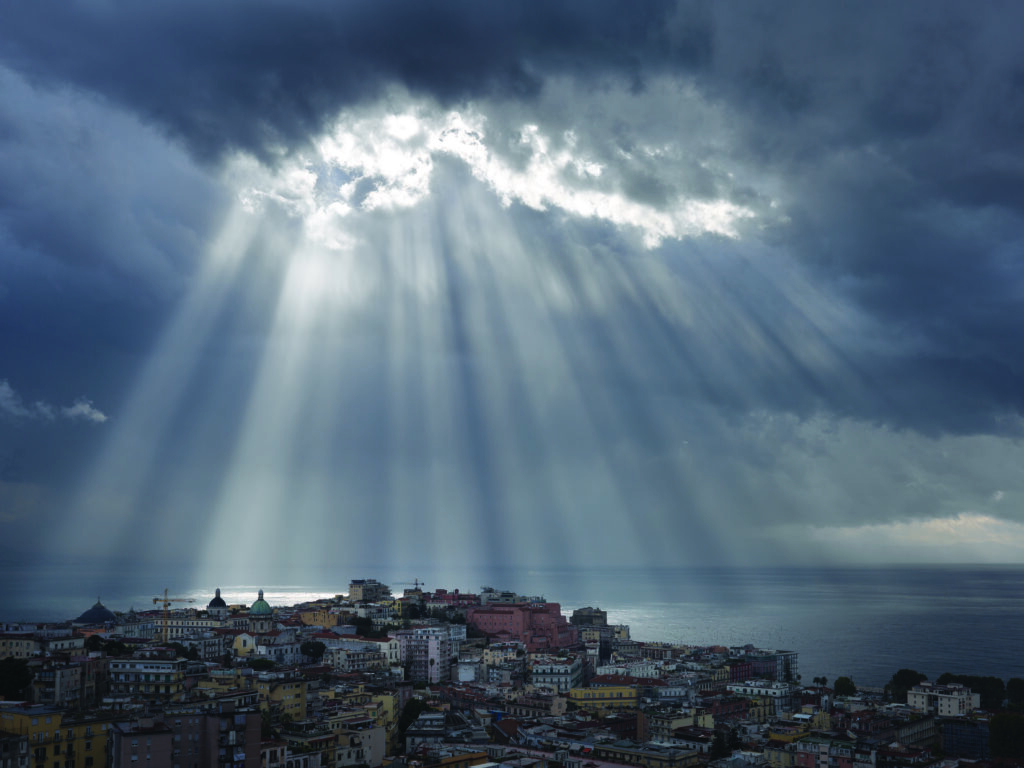
The promontory of Pizzofalcone overlooking the Gulf of Naples
The ancient city of Parthenope was founded by the Cumans in the 7th and 6th century B.C. on a rocky spur made of yel low tuff stone called Pizzofalcone (Mount Echia) and it included the territory from Megaride rocky islet to Pizzofalcone hillside. On the most panoramic point of the promomtory there are the ruins of Lucullo’s Imperial Villa, that extended up to the area of Castel dell’Ovo. Pizzofalcone, also known as Monte di Dio, belongs to the district of San Ferdinando, among Borgo Santa Lucia, Chiatamone and Chiaia. The name dates back to the second half of 1200 because King Carlo I d’Angiò ordered to build a “Falconiera” on the hill to practice hunting with falcons.
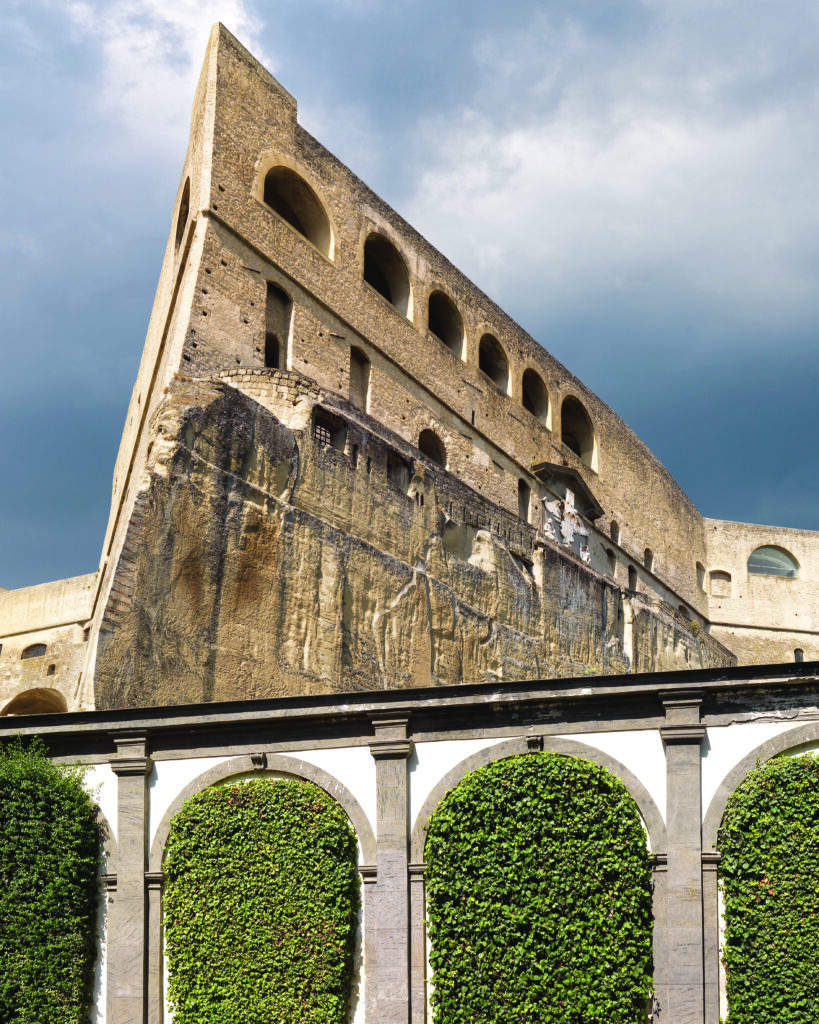
Castel Sant’ Elmo and the Charterhouse of San Martino - Naples
The Gothic Angiovese Castle was designed in 1329 to gather with the Charterhouse of San Martino by Tino Camaino by order of Roberto d’Angiò. In the Aragonese period it became a defensive fortress with a six-pointed stellar plan on the project by the architect Pedro Luis Escrivà becoming the only fortress in the world for its high impregnability. With the Bourbons it became a military prison. From the square opposite the castle you can enjoy one of the most panoramic views across the city. From the square a complex system of steps leading to the historical city centre starts: the “Pedamentina of San Martino”, declared as World Heritage Site by UNESCO. This link was initially used to facilitate the transport of materials necessary for the construction of the monumental complex. The Charterhouse of San Martino is one of the most important monastic centres of the Chartusian order in Italy. It forms almost a single complex with Castel Sant’Elmo. The current plant shows Renaissance, Baroque and Rococo interventions. The sun dial of the Prior’s Apartment is an artistic and astronomic masterpiece. It is one of the most complete and beautiful sundials in Italy.
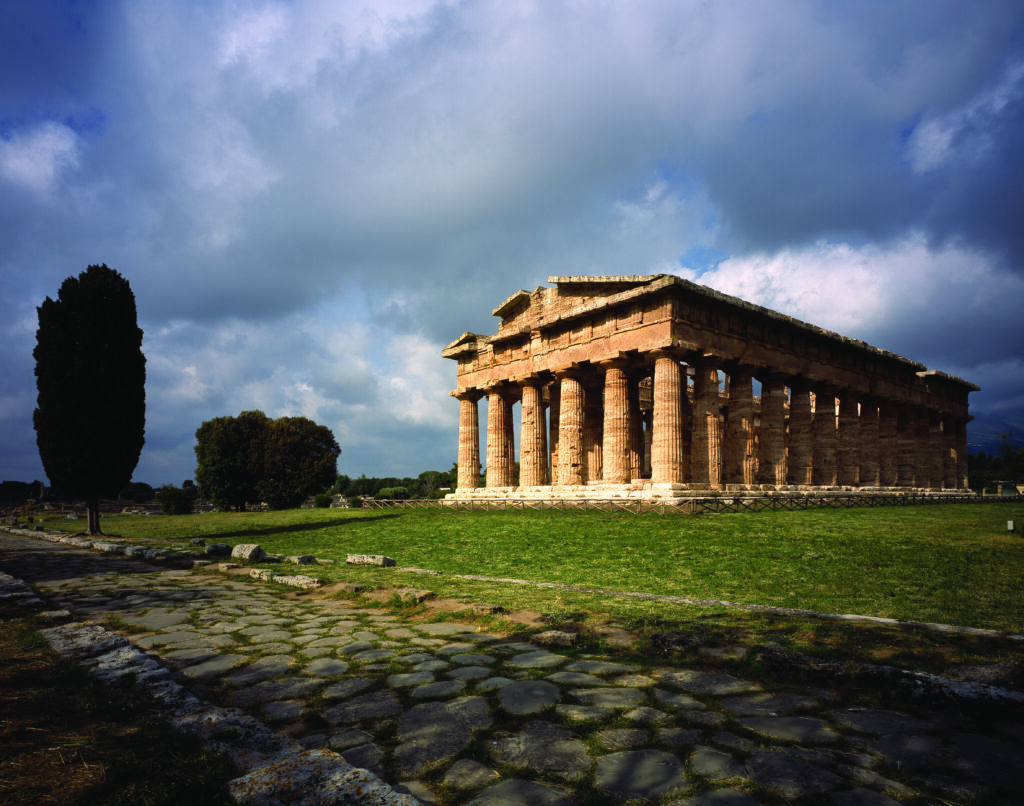
Temple of Neptune, Paestum – Salerno
It is one of the few examples of the best preserved Greek temples in the world and the biggest temple in the archeologic area of Paestum located south of Salerno, in Cilento, north of Agropoli. The Temple of Neptune, also called Temple of Poseidon, was built in the 5th century B.C. in the city of Poseidonia (Paestum in Roman). It was dedicated to Hera, Zeus’s wife and main goddess in Poseidonia, to whom the cycles of nature and man were entrusted. The rediscovery of Paestum was due to Charles of Bourbon who started the rehabilitation of the roads in 1762. This allowed an easier accessibility to the site thus transforming it in one of the essential destinations for the Grand Tour travellers
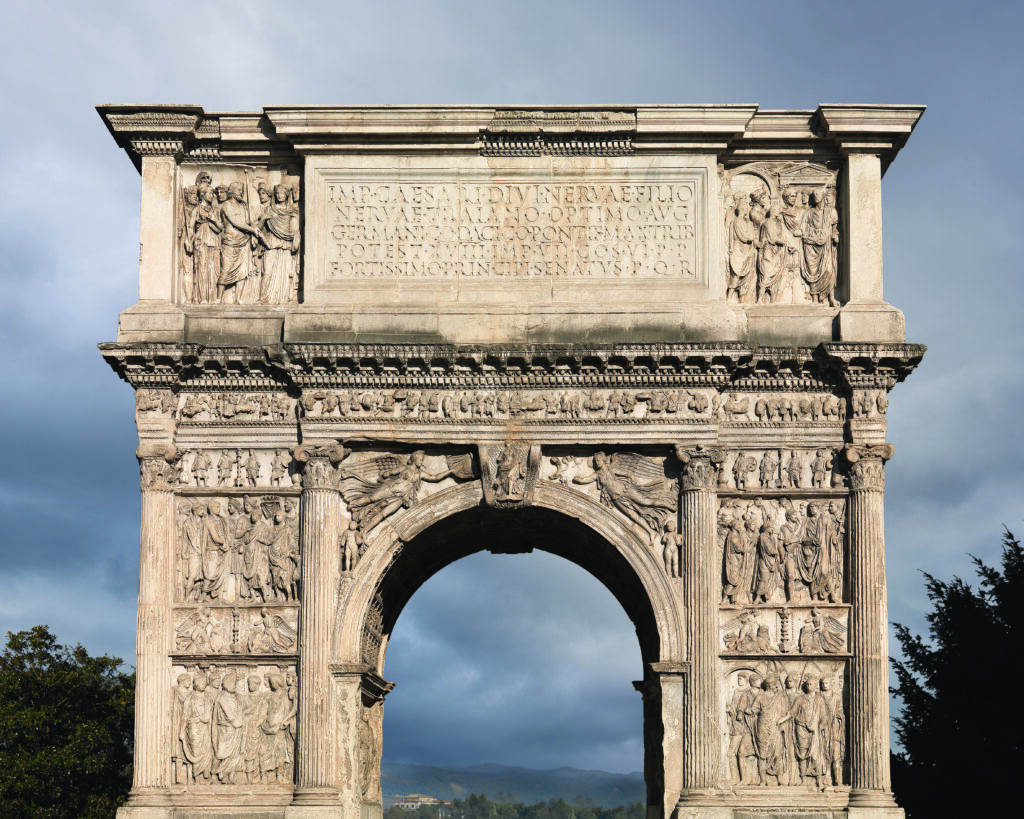
Arch of Trajan - Benevento
It is a commemorative arch dedicated to Emperor Trajan (high 15,60mt. and large 8,60 mt.). It is one of the richest and best preserved Roman triumphal arches, built between 114 and 117 A.D. on the occasion of the inauguration of the ancient Via Traiana, a variant of Via Appia. Richly decorated and showing different themes, the high relief frieze of the entablature shows Trajan’s march of the triumph over Dacia.
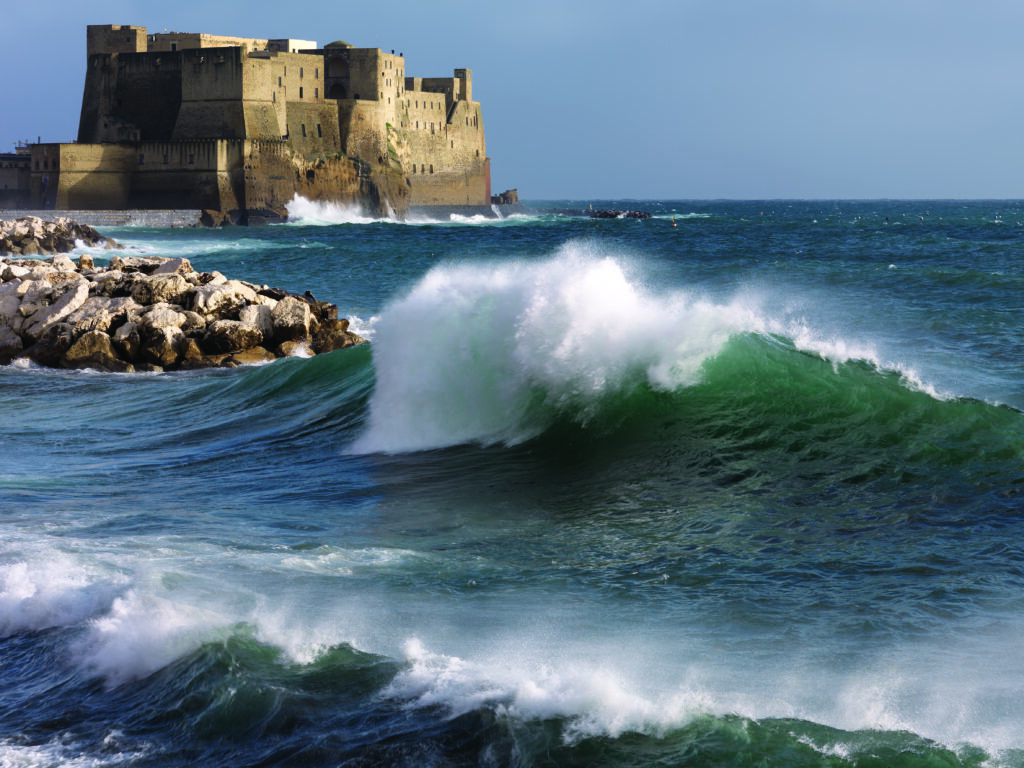
Castel dell’Ovo - Naples
Castel dell’Ovo is one of the oldest and most distinctive castles in Naples, its name is linked to the medieval legend of the magic egg that was capable of protecting the fortress, the city and its people from disaster or danger. Virgil (who was considered also a magician) is supposed to have preserved the egg in a cage and hidden it in the castle. The story of its construction begins in the Roman Age (1st century A.D.) on the islet of Megaride, where in the 8th B.C. the Greeks had settled and founded Neapolis and where even before, according to the legend, the body of the mermaid Parthenope had been found. There the huge and sumptuous villa of the Roman consul Lucullus was built. After his death, the villa first became a monastery and then, during the Duchy of Naples, it was fortified to face invaders. Therefore, the castle was mainly a fortress, which was extended, strengthened and modified over time, under the Normans, the Swabians, the Angevins and mainly under the Aragones. It was also a prison, in 1608 Tommaso Campanella was transferred and imprisoned there before the death condemnation. In the mid-18th century under Charles of Bourbon it was further fortified, but its use changed from military to civic when the King turned it into a glass and mirror factory to improve manufacturing production in Naples. Castel dell’Ovo once again became a fortress in 1799 by welcoming the revolutionaries of the Repubblica Partenopea. Today Castel dell’Ovo is part of a very lively small village, Borgo Marinari, with its small touristic harbour.
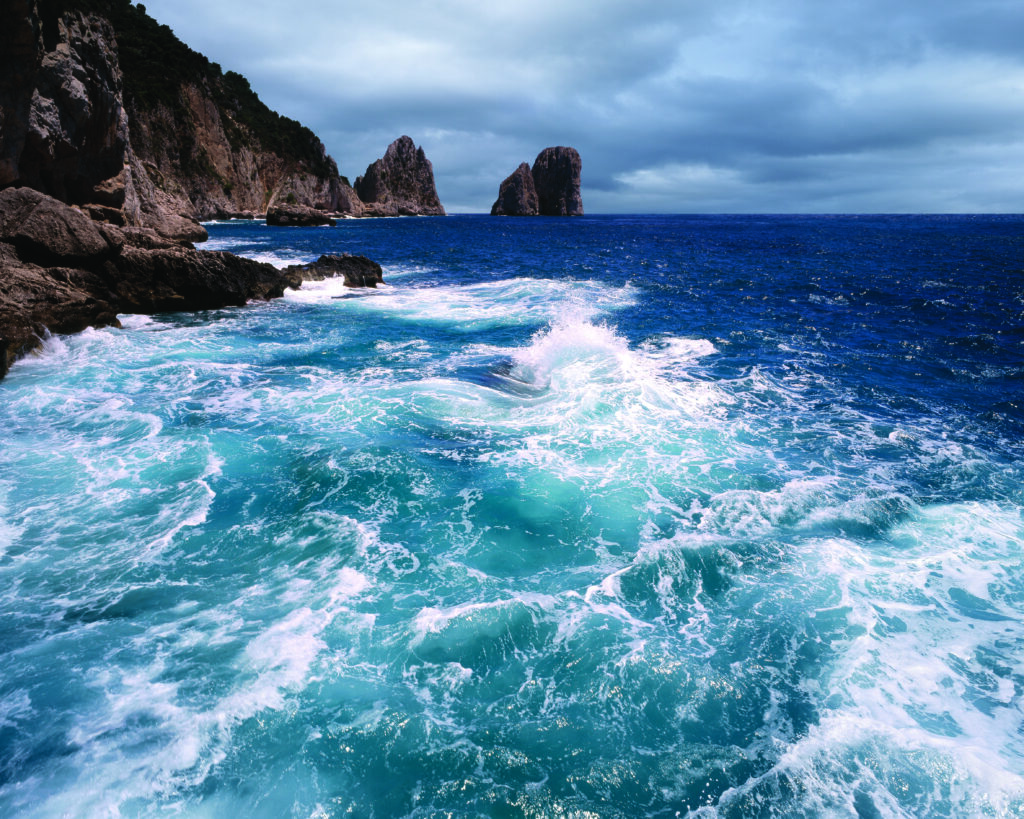
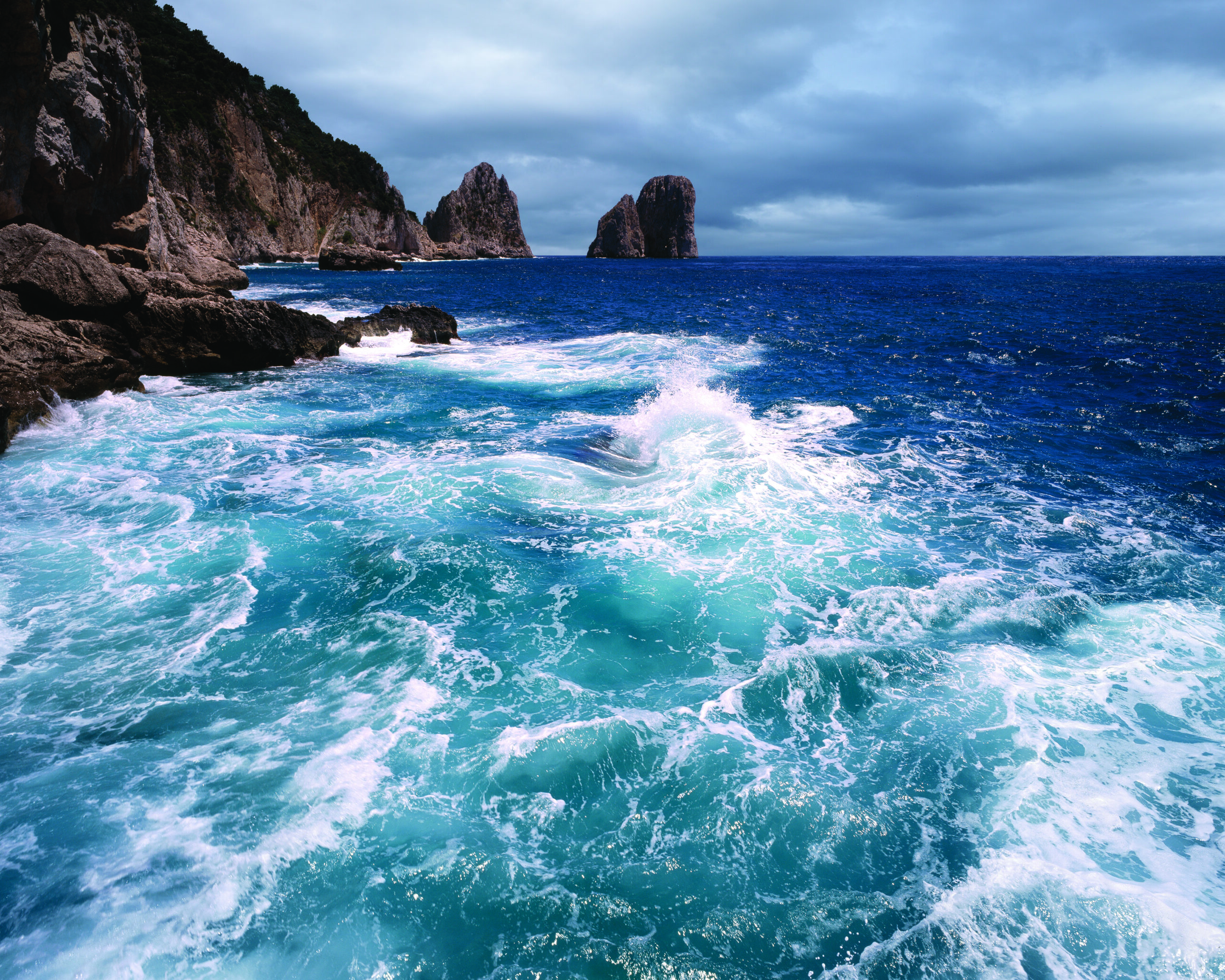
The Faraglioni seen from Arsenale beach - Capri
Their name derives from the ancient Greek term “pharos” (lighthouse), because in ancient times fires used as navigation signals for the night were lighted there. They are composed of three rocky mountain peaks: 109 metres (the closest to the island “Faraglione di Terra”), 81 metres (the one in the middle “Faraglione di Mezzo”) 104 metres (the farthest from Capri “Faraglione di Fuori”). The third one is the habitat for the famous and rare blue lizard. They are mentioned in the Odyssey by Omero as the huge rocks hurled by Polyphemus at Ulysses. Capri, for its colours and perfumes, for the uncontaminated and wild nature, for the rare beauty of the Faraglioni as huge natural sculptures, together with the extraordinary scenery, and also for the fishermen’s hospitality, was a much-loved residence for the Romans (Tiberio built on the isle twelve imperial villas) and also one of the Grand Tour travellers’ favourite destinations.
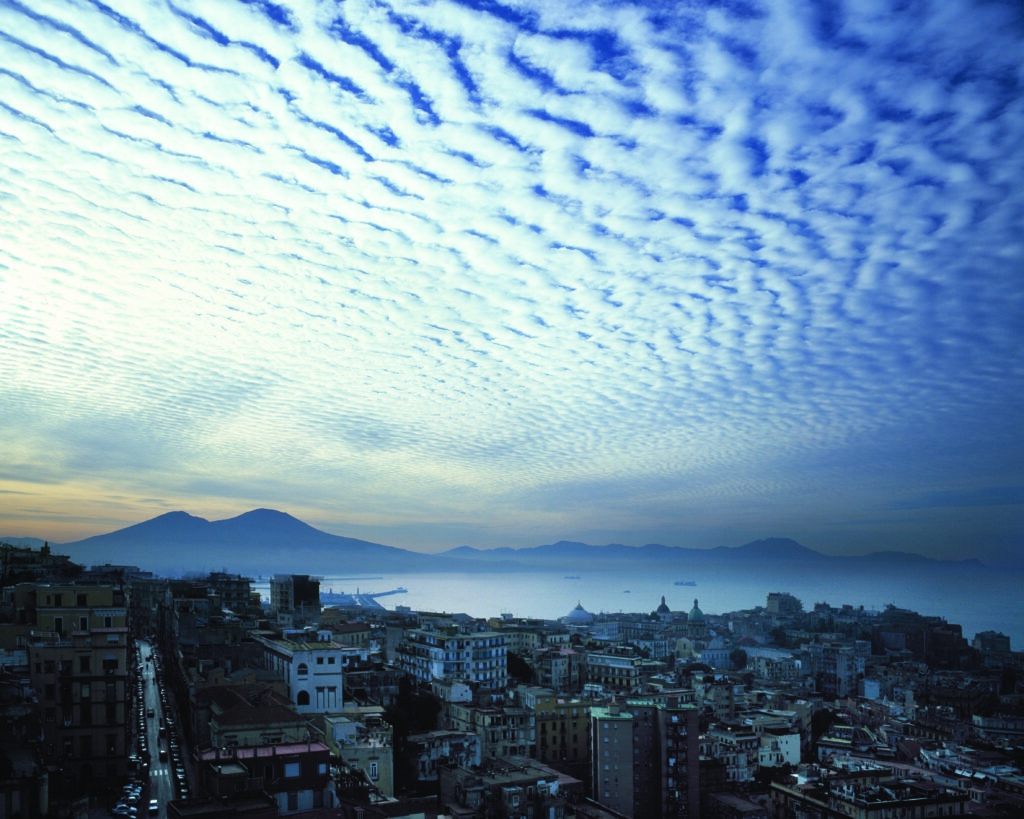
View of Naples with volcano Vesuvius
Naples was founded by the Cumans around the middle of the 8th century B.C. under the name of Parthenope. According to the legend the city was born after the death of the mermaid Parthenope, who killed herself after the refusal of Ulysses while he was travelling off the coast. After this event she was worshipped as the protective goddess of Naples. After the expulsion of the Etruscans, the city was reborn under the name of Neapolis: the “new town” of Ancient Greece. The gulf, one of the most beautiful in the world, and Mount Vesuvius (that was in Ancient times consecrated to the Greek hero Hercules, symbol of strength and impetus), are two Parthenopean landmarks.
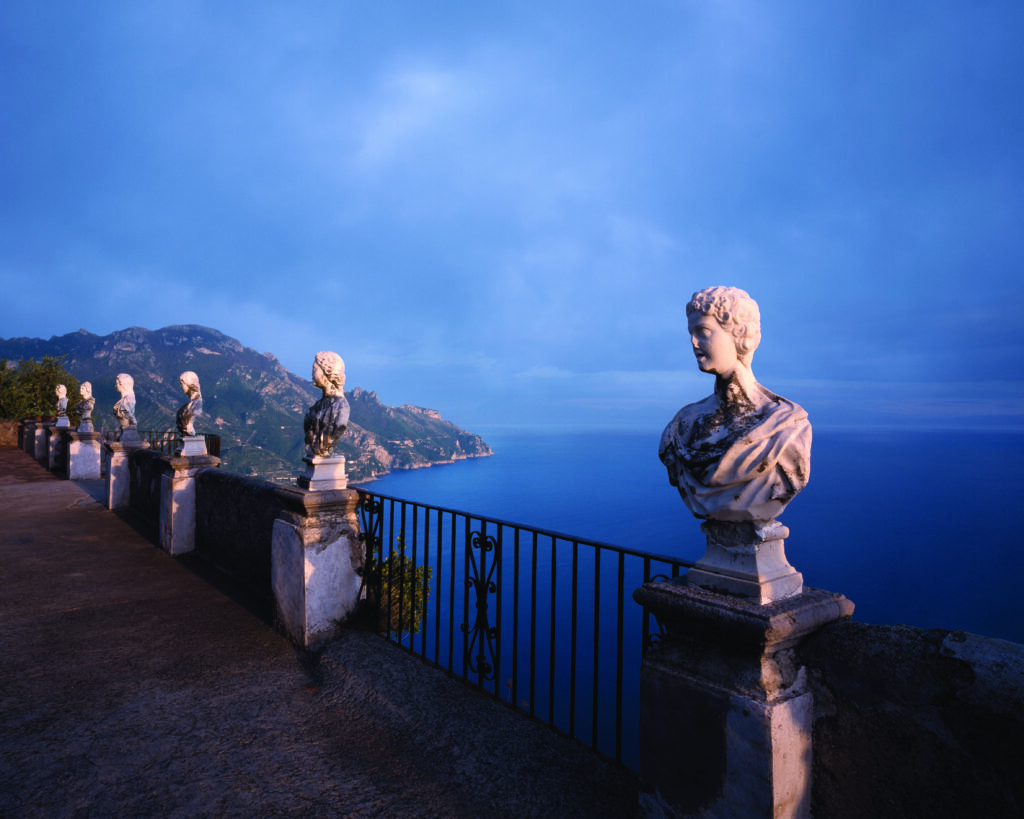
Terrace of Infinity, Villa Cimbrione, Ravello - Salerno
Ravello rises on a hill that from Amalfi climbs up to the Lattari Mountains. The tourists who arrive in Ravello are amazed by the stunning landscape that is possibile to gaze from its terraces. The natural terrace of Infinity, also known as “Porta del Sole” is part of Villa Cimbrione and it opens the view over the infinity up to the Cilento mountains. In the 11th century the Patrician villa was built on the rocky promontory “Cimbronium” where there is a secular park that was the site of an old and small late-Roman estate. At the end of the 19th century the English nobleman Lord Grimthorpech Ernest William Beckett during his Grand Tour in Campania fell in love with the villa and in 1904 bought part of it, saving the site from a complete state of disrepair and turned it into an amazing “Garden of delights”. During 15 years of work the gardens were wonderfully renewed. English botanists and landscapers together with local craftsmen shaped one of the best combinations of Italian and British landscape culture in the world.
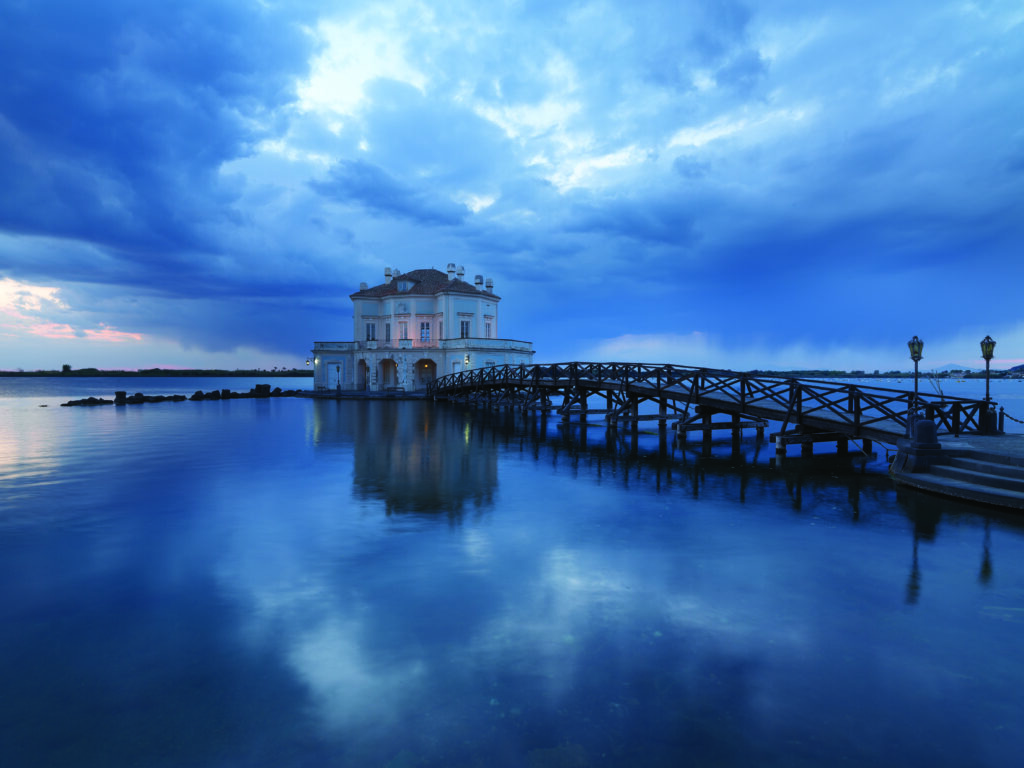
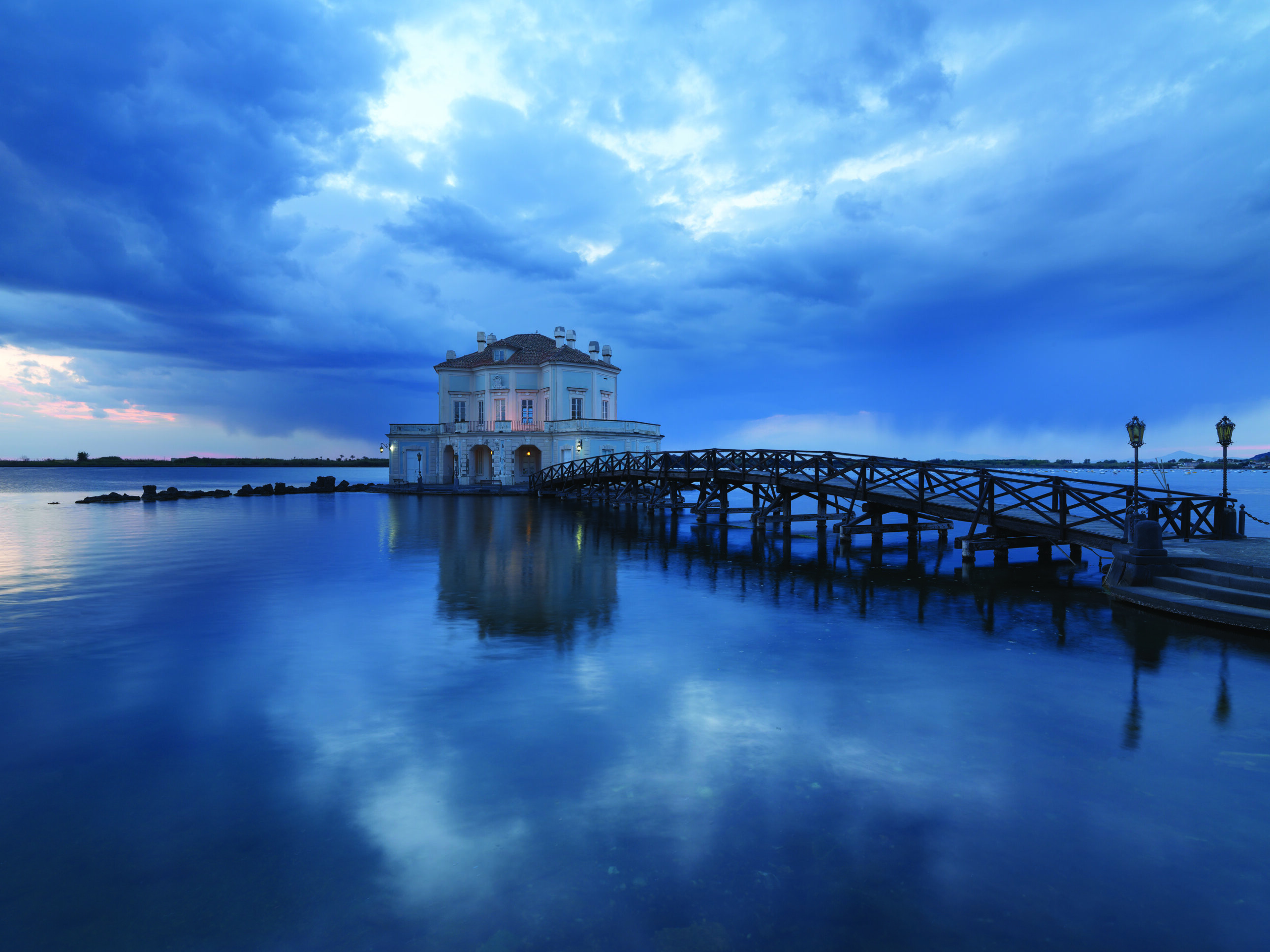
Casina Vanvitelliana of Lake Fusaro, Bacoli - Campi Flegrei (Naples)
Lake Fusaro is one of the four Phlegrean lakes together with Lake D’Averno, Lake Lucrino and Lake Miseno. Its original name was “Acherusio” that in the ancient Greece was the “Acherusiapalus”, the hellish swamp formed by the Acheron River. It was so called because Lake Fusaro was close to Lake Averno (that in Ancient Times had been a volcanic crater) that formed unusual natural phenomena in the air and for that the area began to be identified as the gate to the underworld. King Charles III of Bourbon reversed this infernal view when the lake became the royal hunting and fishing. Later the gracious hunting estate was built there. In the lagoon the king introduced oyster farming, a very profitable activity already in Roman Age. Luigi Vanvitelli with King Charles III started the works to transform the place, while the elegant royal hunting lodge was commissioned by Ferdinando IV and in 1782 built by Carlo Vanvitelli.
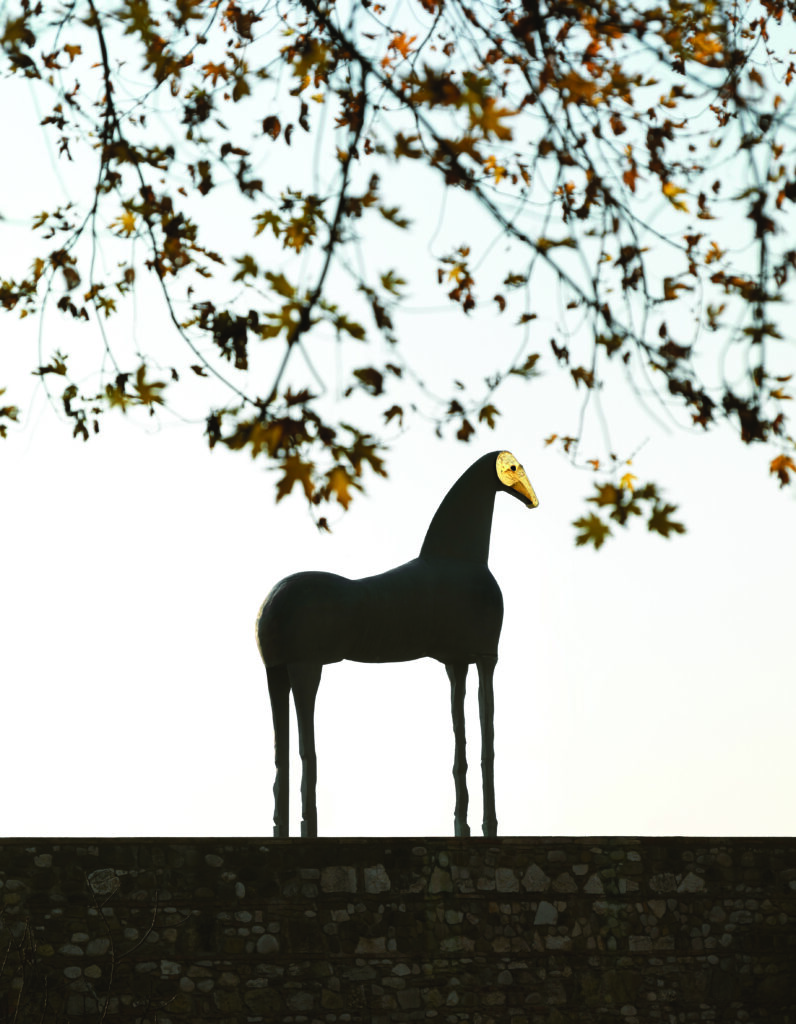
Hortus Conclusus - Benevento
From Latin “closed garden” the name was used for the “enclosed garden” of medieval monasteries protected and hidden by high walls. With its quadrangular shape it symbolised the four corners of the universe, at the centre there was a tree as a symbol of life and a well as the symbol of knowledge. This type of garden was used by ascetics to get closer to God through meditation. They used it as a peaceful place of reconciliation with the world and themselves. In 1992 Mimmo Paladino, one of the most famous representatives of the Italian Transavantgarde, together with a team of architects created an artistic installation in the hortus conclusus of the Monastery of San Domenico in Benevento. They represented the concept of ascetism and transcendental meditation through contemporary art. This contemporary hortus conclusus also evokes the thousand-year-old city’s history as capital of the Samnite and Lombard region and the research of harmony between nature and history. The place is rich in mythological references, among them the symbolic bronze horse statue by Paladino: it is wearing a golden mask like Agamemnon but it also evokes the Trojan horse. It is placed at the top of the garden walls and seems that it is protecting and monitoring both the garden and the town below.
