


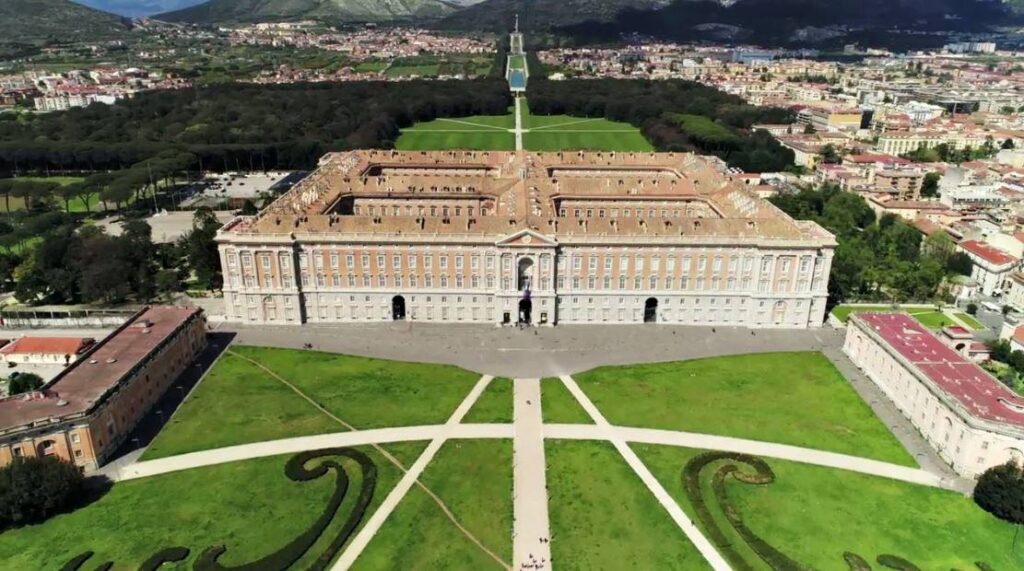
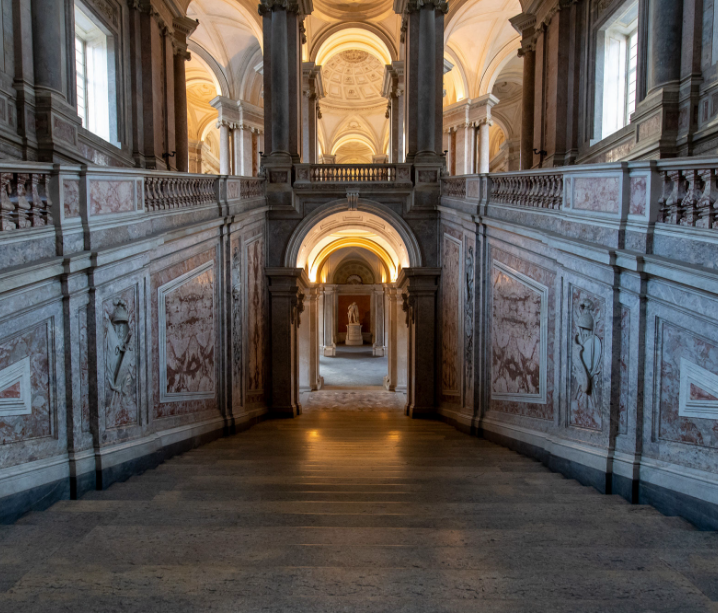
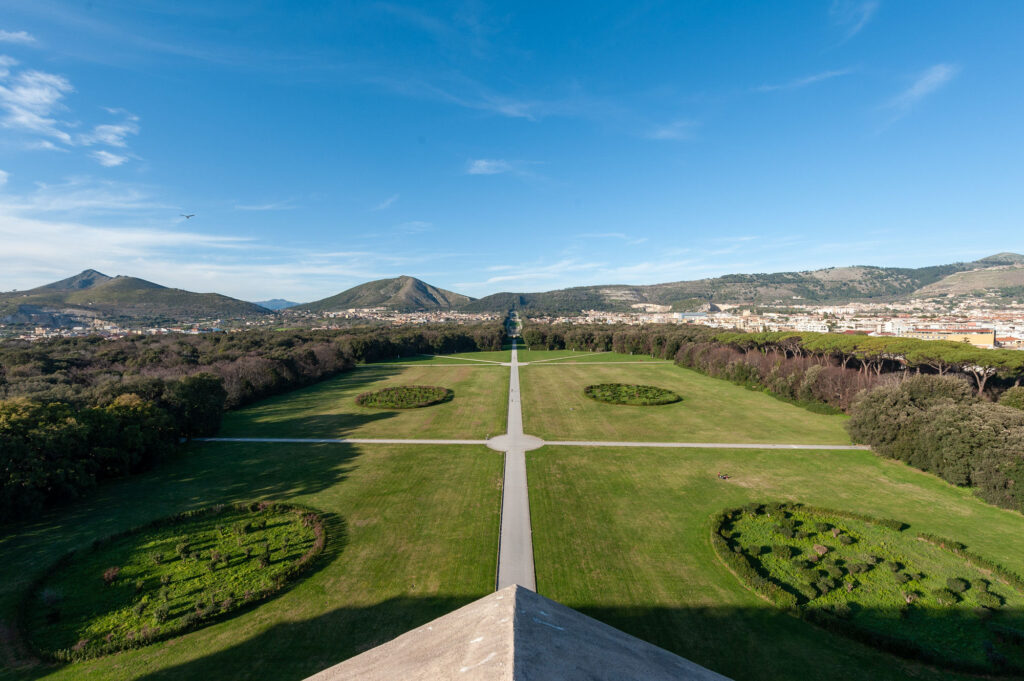
 Explore the Royal Palace



Raffaela Mariniello
The personal Grand Tour by Raffaela Mariniello, who has always focused her attention to landscape transformations and the relationship between man and the places he lives in, is a revelation journey that stimulates critical thinking about identity alteration of historic cities and at the same time about their deepest and most intimate way of manifesting themselves.
Artist bio
Raffaela Mariniello was born in Naples in 1961. Her artistic research is focused on social and cultural themes, in particular, the transformation of the urban landscape and the relationship among man, everyday life and nature. In 1991, she started the project “Bagnoli, a factory”, a photographic campaign that continues to be still today the only historical testimony to the steel mill Italsider. It was exhibited in Naples, Nantes, Clais, Paris, Milan between 1992 and 1995. Between 2001 and 2006 she produced the series “Naples, an imaginary veduta” and the cycle “On the shore of the Mediterranean”. In 2011 she finished the series “Souvenirs d’Italie” about the historical centres of Italian cities where she shows the transformation of locations that are subject to mass tourism, a work exhibited in the same year at the House of Photography in Villa Pignatelli. Among her most recent exhibitions “Capri B&B Behind and Beyond” in 2016 at the Charterhouse of San Giacomo in Capri, where she continues her research on the consequences of mass tourism on the identity of places, giving back a very intimate interpretation at times spiritual. “La Deriva del Paisaje” is the retrospective exhibition that in 2018 the Italian Institute of Culture of Madrid dedicates to her. Then she participated to different artist residences abroad in 2018 and 2019, aimed at promoting Italian contemporary art abroad. On May 2018 she was at Barcelona in a residence artist for the cycle of residences, in 2019 she went to Ivory Coast in Africa for the project curated by Adriana Rispoli “Under the Spell of Africa” with the participation of three Italian artists, Eugenio Tibaldi, Flavio Favelli e Raffaela Mariniello. During the residence in the city of Abidjan, she produced and printed three wide images for the exhibition “Nature, Culture, Artifice” at Donwhai Contemporary Art Foundation of Abidjan (November 2019). On 9 July 2021 there was the opening of the exhibition “Utopia/Dystopia” at The MADRE Museum in Naples, curated by the new artistic director Kathryn Weir where Raffaela Mariniello participated with some of her works. On the occasion one of her works was bought by the museum, and now it has become part of its permanent collection. Raffaela Mariniello’s works are in private and public collections, among them Bibliothèque National de Paris and Maison Européenne de la Photographie, Paris; Banca Commerciale of Milan; Sandretto Re Rebaudengo Foundation, Turin; Fond National d’Art Contemporain, Paris; MADRE Museum of Naples; Metropolitana di Napoli; MAXXI of Rome.

 Travel notes
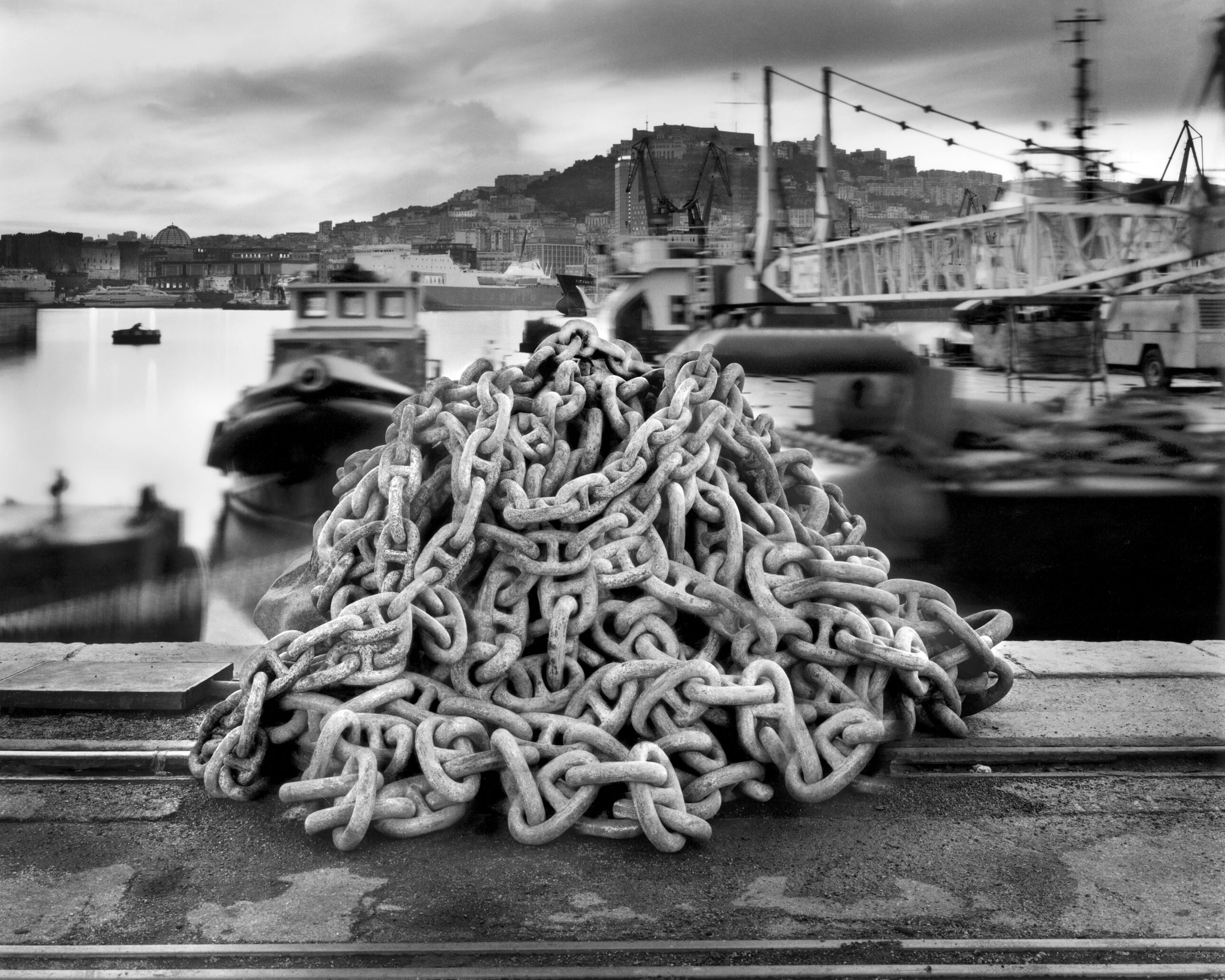
The Port of Naples
The port is one of Naples landmarks and symbolises the deep bond between the city and the sea. Founded by the Greeks, it was a military seaport and a commercial harbour during the Greek-Roman Age and experienced its splendour in the Norman age. With the Angevins it got enriched with new buildings, under the Aragonese with warehouses, storages and factories, with the Bourbons it became one of the strongest ports in Europe, transforming the city in a great economic and commercial capital city. In 1818 the “Real Ferdinando I”, the first steamship of the Mediterranean Sea, was launched.
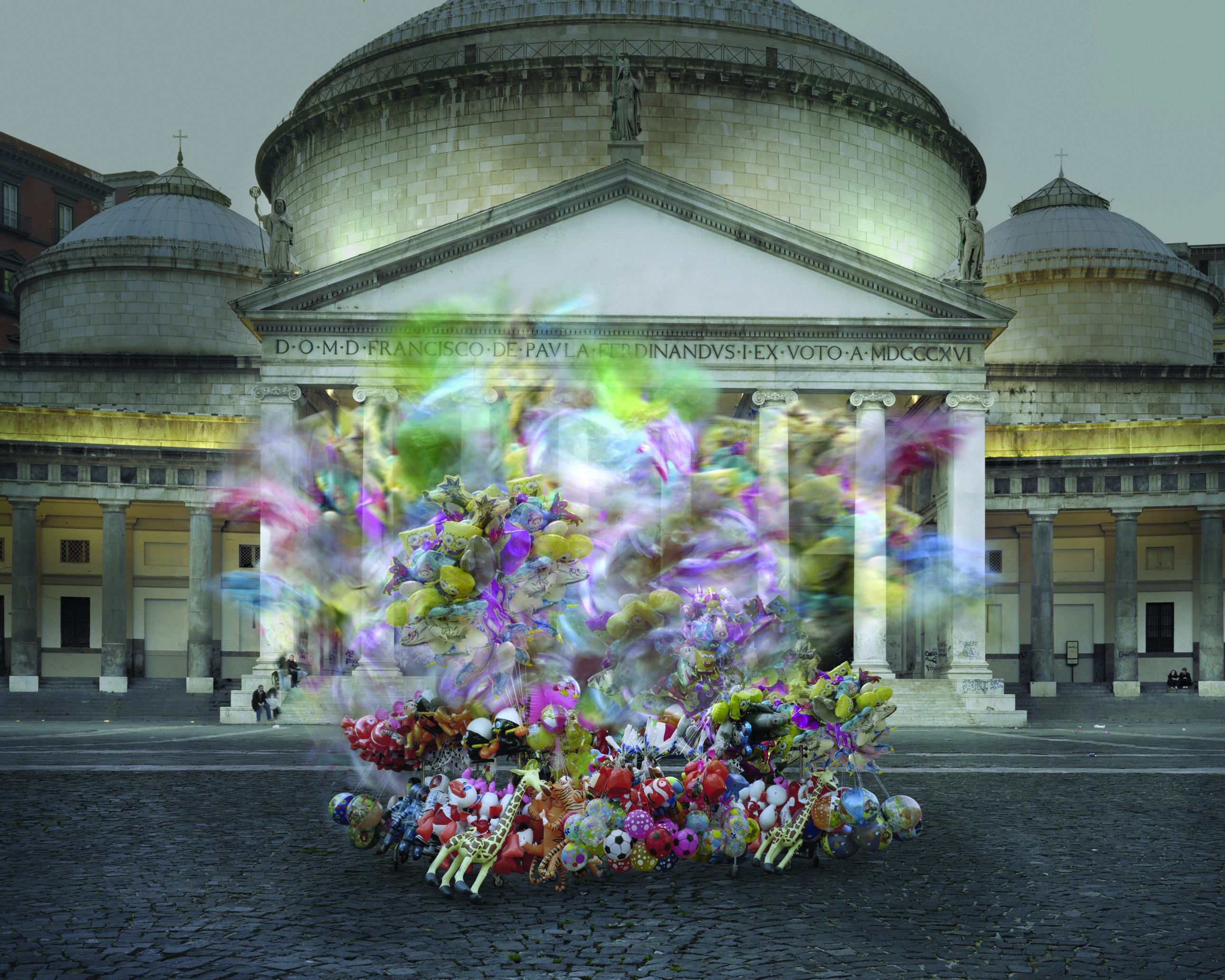
Plebiscito Square - Naples
During the Spanish viceroyalty it was known as “Largo di Palazzo” (Palace Square), it was later called “del Plebiscito” (the square of the people) to celebrate the plebiscite of 1860 that marked the end of the Bourbon Kingdom and the annexiation of the Kingdom of the Two Sicilies into the Savoys’. The square is surrounded by Salerno Palace (1775), Palazzo della Foresteria (Guestrooms Palace, 1815), the Basilica of San Francesco di Paola (1816) and the Royal Palace, whose construction started on a design of Domenico Fontana in 1600. In 1734 it became Charles of Bourbon’s official residence before moving the whole royal family to Caserta. In 1809 two pre-exhisting monasteries were demolished and the square tripled its dimension by order of King Gioacchino Murat to create the Gioacchino Forum. The king had Palace of Ministers of State and Palace of Ministry of Foreign Affairs built. After the expulsion of Gioacchino Murat in 1815, Ferdinando I of Bourbon transformed the original design of the forum by completing the square with the construction of the Basilica of San Francesco di Paola from 1817 to 1846. Thus the new “Plebiscito Square” was inaugurated in 1846. The Basilica is one of the most important examples of Italian neoclassical architecture. Round shaped with a large hemicycle colonnade it was designed by Pietro Bianchi who was inspired by the Roman Pantheon and by an old original project by Leopoldo LaPeruta, finally completed by the Royal House architect Antonio De Simone. At the center of the square there are the equestrian statues of Charles III and Ferdinando I of the Two Sicilies by Antonio Canova.
